Blog 4: Humans back on the Moon and on to Mars

NASA’s plans for sending people to Mars are intertwined with their plans to send humans to the Moon more consistently, and hopefully to be able to establish a human presence their within the decade. They plan to launch the Gateway, a spaceship that will orbit the moon to support future trips there. They plan to launch it in 2022. By having people live on the spaceship they can better understand “how the human body responds in a true deep space environment before committing to the years-long journey to Mars”.
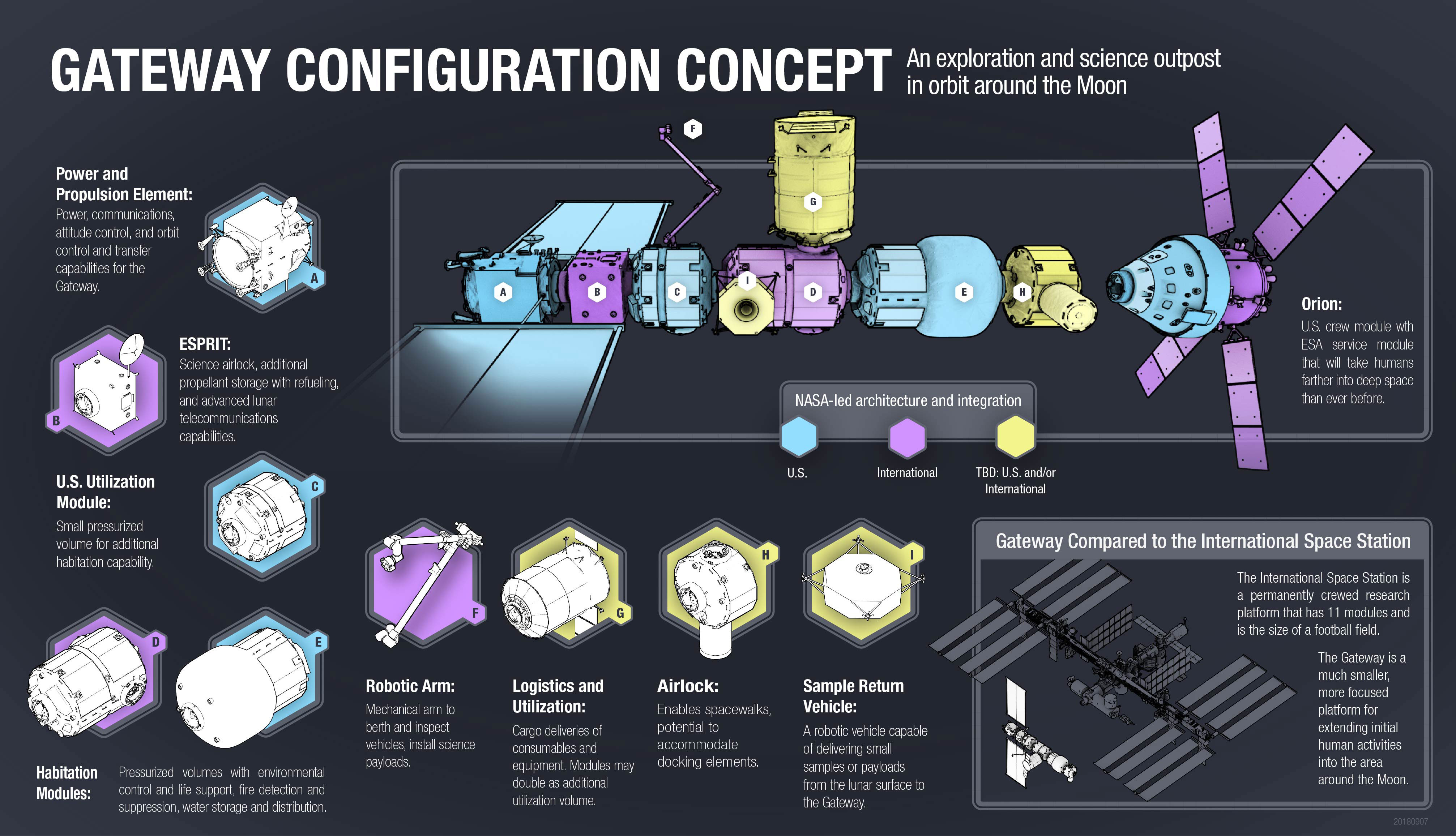
NASA’s Spaceship Design

SpaceX wants to establish a Mars base in the 2020s and plans to launch cargo flights by 2022. This seems a little ambitious to me, though granted I don’t know how long this has been in the works; however, I’d imagine it takes a very long time to design, plan, launch, and travel to Mars especially given NASA’s timeline and the 34-million-mile distance to Mars.

Blog #1: Solar Eclipse Calendar

A solar eclipse is when the moon comes between the sun and the Earth and completely or partially blocks the light from the sun. This can only occur when the moon is at the nodes of its orbit and when its precession allows it to be in this position while being between the sun and Earth. Angular eclipses are when the moon is at its apogee and thus never covers the sun completely. However, at the moon’s perigee it is 400 times closer than the sun but 400 times smaller in actual size and thus can perfectly cover it. I did not get to see the “great American eclipse” because of a prior commitment, so I am very interested in finding the next total solar eclipses that would be easy to go to. I am not particularly interested in the partial ones because they do not entail the full majestic experience of the total eclipses (darkness descending, stars becoming visible, crickets chirping), and so I didn’t include them in my proceeding list.

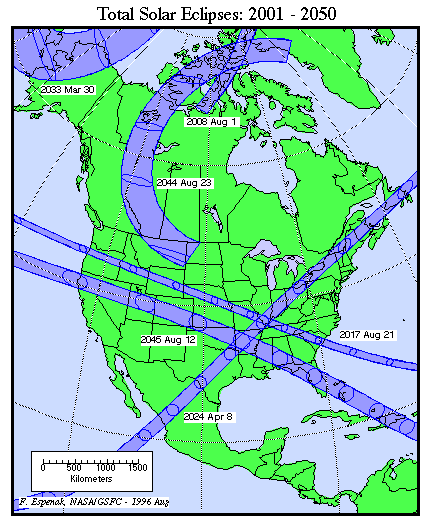
North American Solar Eclipses 2001-2050

Additionally, total solar eclipses in the world from 2019-2030:

NASA
NASA
NASA
NASA
NASA
NASA

The most easily accessible one to me is the 2024 eclipse that goes through the United States. However, I also would love to travel to New Zealand at some point in my life so perhaps the 2028 eclipse would be a perfect opportunity to go there.